
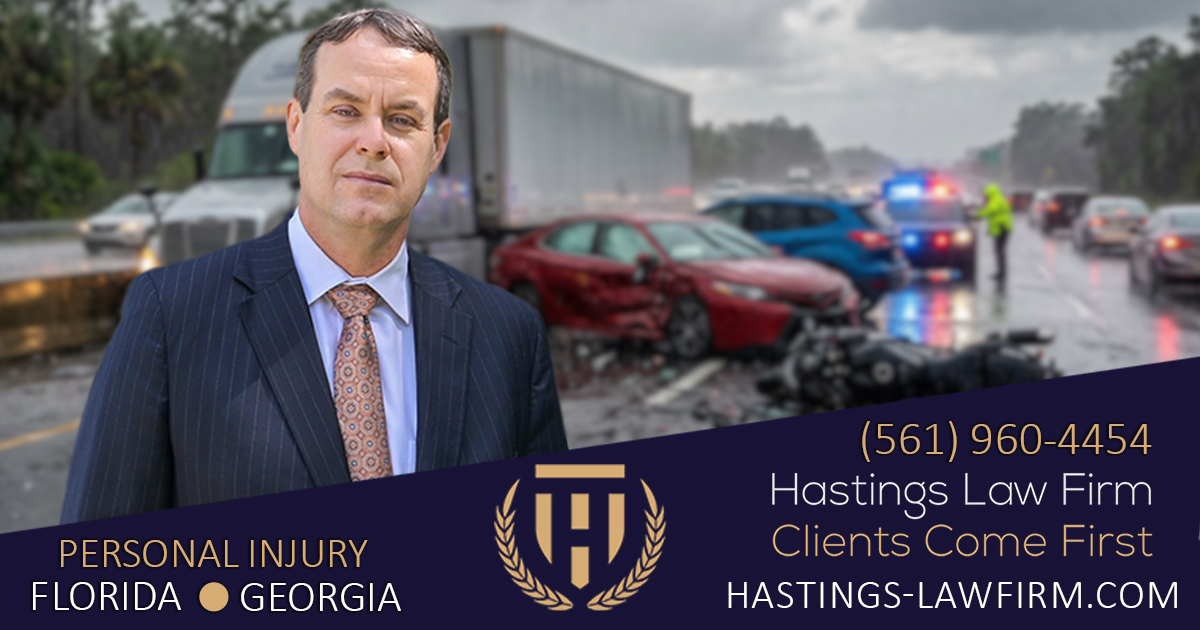
Florida Hurricane Season Driving Safety: Rain, Wet Roads, and Your Legal Rights After an Accident
From June through November, Florida’s hurricane season brings heavy rain, reduced visibility, flooded roadways, and hazardous driving conditions. While rain itself does not cause crashes, drivers who fail to adjust their speed and driving behavior for changing conditions often do.
Whether you are driving a passenger vehicle, commercial truck, motorcycle, bicycle, or walking as a pedestrian, severe weather increases the risk of serious injuries. Every driver has a legal duty to operate their vehicle with reasonable care, especially when weather conditions become dangerous.
Rainy Weather and Traffic Crashes in Florida
Florida consistently ranks among the states with the highest number of traffic crashes in the nation. According to the Florida Department of Highway Safety and Motor Vehicles (FLHSMV), hundreds of thousands of crashes occur each year, with thousands occurring during adverse weather conditions such as rain, thunderstorms, and standing water. Wet pavement reduces tire traction, increases stopping distances, and contributes to hydroplaning, while heavy rain can significantly reduce visibility. These conditions increase the likelihood of rear-end collisions, lane departure crashes, and multi-vehicle accidents.
Drivers often make the mistake of assuming that because they are familiar with a roadway, they can continue driving at normal speeds during heavy rain. In reality, the law requires motorists to operate their vehicles prudently under existing conditions.
Common Causes of Rain-Related Accidents
Some of the most common causes of accidents during Florida’s rainy season include:
- Driving too fast for conditions
- Following another vehicle too closely
- Hydroplaning due to worn tires or excessive speed
- Distracted driving
- Failure to use headlights during rain
- Unsafe lane changes
- Failure to yield
- Poor visibility
- Failure to maintain brakes, tires, or windshield wipers
These factors can lead to collisions involving passenger cars, commercial trucks, motorcycles, bicycles, pedestrians, and public transportation vehicles.
Hydroplaning: A Serious Hazard
Hydroplaning occurs when a layer of water builds between the tires and the roadway, causing a vehicle to lose traction. When hydroplaning occurs, steering, braking, and acceleration become ineffective.
To reduce the risk:
- Slow down before entering standing water.
- Keep your tires properly inflated and replace worn tires.
- Avoid sudden braking or sharp steering movements.
- Increase following distance.
- Allow your vehicle to regain traction gradually.
Motorcyclists and Bicyclists Face Greater Risks
Rain presents additional dangers for motorcycle and bicycle riders.
Road markings, metal utility covers, bridge joints, leaves, oil residue, and painted crosswalks become significantly more slippery when wet.
Motorcyclists should:
- Reduce speed.
- Increase following distance.
- Wear highly visible protective gear.
- Avoid sudden acceleration or braking.
Drivers should give motorcycles and bicycles additional space, especially during storms when stopping distances increase.
Commercial Trucks Require Longer Stopping Distances
Large commercial trucks become even more difficult to stop on wet pavement.
Drivers should never:
- Cut closely in front of a truck.
- Drive in a truck’s blind spots.
- Follow too closely behind a truck.
- Attempt unsafe passing maneuvers during heavy rain.
Truck drivers also have a duty to reduce speed and operate safely when weather conditions deteriorate.
Florida Laws Every Driver Should Know
Florida law requires motorists to exercise reasonable care under all driving conditions.
Important safety rules include:
- Turn on your headlights whenever windshield wipers are in continuous use.
- Slow down during rain and maintain a safe following distance.
- Yield to emergency vehicles and disabled vehicles in accordance with Florida’s expanded Move Over Law.
- Never drive through flooded roadways if you cannot determine the depth of the water.
- Obey posted speed limits—but remember that the legal speed limit may still be too fast for weather conditions.
- Avoid distracted driving by keeping your focus on the road.
Failure to adjust driving behavior for weather conditions may constitute negligence if it results in a crash. Florida’s Move Over Law has also been expanded to protect disabled vehicles stopped on the roadside under specified conditions.
Safety Tips During Hurricane Season
Before heading out:
- Check the weather forecast.
- Leave earlier to avoid rushing.
- Inspect tire tread and tire pressure.
- Replace worn windshield wipers.
- Verify headlights and brake lights are functioning.
- Keep an emergency kit in your vehicle.
- Charge your cell phone before traveling.
While driving:
- Slow down.
- Increase following distance to at least five or six seconds during heavy rain.
- Avoid cruise control on wet roads.
- Keep both hands on the steering wheel.
- Stay alert for standing water and flooded intersections.
- Watch carefully for pedestrians and cyclists who may be less visible.
What To Do After a Rain-Related Accident
If you are involved in a crash:
- Move to a safe location if possible.
- Call 911.
- Seek immediate medical attention.
- Take photographs of the vehicles, roadway conditions, and weather.
- Obtain witness information.
- Report the accident to your insurance company.
- Avoid making recorded statements before consulting an attorney, especially if serious injuries are involved.
A rainy day does not excuse negligent driving. Drivers must adjust their speed, maintain control of their vehicles, and exercise reasonable care under changing weather conditions. When they fail to do so, innocent people can suffer life-changing injuries.
If you, a loved one, or a friend has been injured in a motor vehicle accident involving a car, truck, motorcycle, bicycle, or pedestrian because another driver failed to exercise reasonable care during rainy or hazardous weather conditions, Hastings Law Firm is here to help.
We offer free consultations and are committed to protecting the rights of injured Floridians. Contact Hastings Law Firm today to discuss your case and learn how we can help you pursue the compensation you deserve.
Clients Come First.