
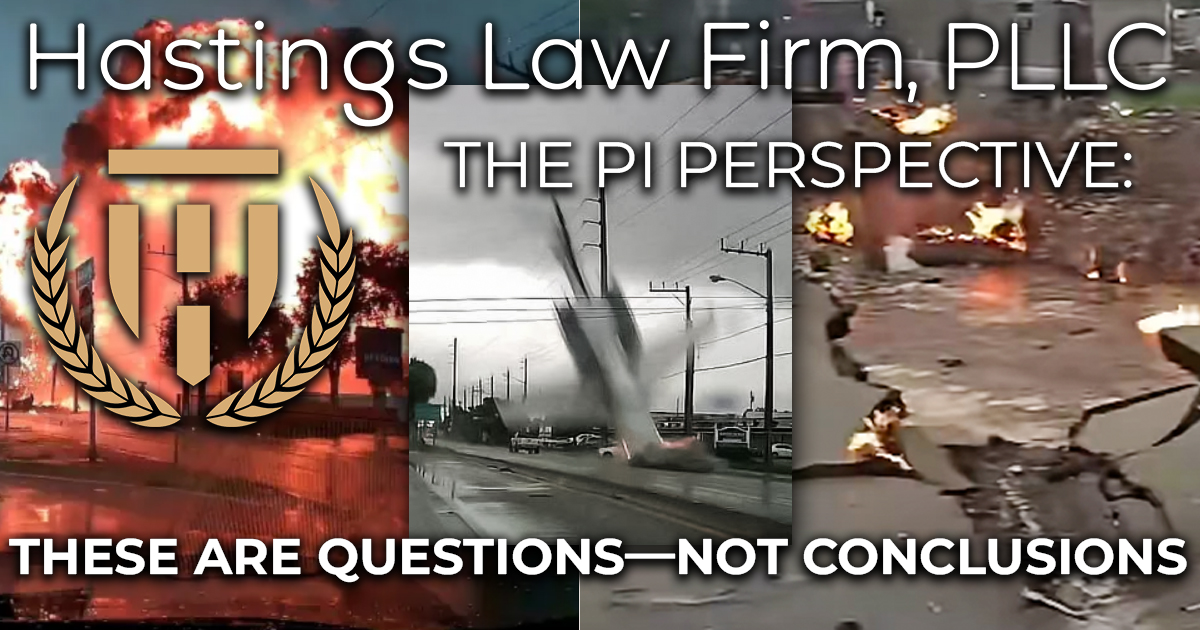
On November 1, 2026, a Learjet 60 crashed near Greenacres in Palm Beach County, Florida, killing all nine people aboard—seven passengers and two crew members. The private jet was traveling from Austin, Texas, to the Bahamas.
Nine lives lost. A community shaken. And serious questions about what went wrong.
According to preliminary information released by the National Transportation Safety Board (NTSB), the crew reported icing, moderate turbulence, and precipitation while flying at approximately 35,000 feet.
Shortly after requesting a climb to 37,000 feet, the aircraft entered a rapid, high-speed descent.
Investigators subsequently recovered pieces of the aircraft's left elevator—a critical flight-control surface responsible for helping control the aircraft's pitch—several miles from the crash site.
Did a structural or mechanical failure contribute to the loss of control? Or did the extreme forces experienced during the descent cause the aircraft to break apart?
Those questions remain unanswered.
Could the Weather Have Been Avoided?
The Federal Aviation Administration's Aeronautical Information Manual, § 7-1-27, provides important guidance regarding thunderstorm avoidance.
The FAA advises pilots to regard thunderstorms with tops reaching 35,000 feet or higher as extremely hazardous and recommends maintaining at least 20 miles of separation from thunderstorms identified as severe or producing intense radar echoes.
Importantly, this guidance concerns thunderstorm hazards, not a prohibition against flying at 35,000 feet.
Whether these recommendations were relevant to the precise conditions encountered by this aircraft remains a matter for investigators to determine.
The Personal Injury Perspective: Prevention, Responsibility, and Accountability
From a personal injury attorney's perspective, one of the most important questions following any catastrophic aviation accident is:
Could this tragedy have been prevented?
Investigators must examine the evidence, including weather conditions, flight planning, crew decisions, aircraft maintenance records, structural integrity, and potential mechanical failures.
Aviation accidents can involve multiple contributing factors. Depending on the findings, legal responsibility may extend beyond the flight crew to aircraft operators, maintenance providers, manufacturers, or other parties.
However, the existence of a tragic accident does not, by itself, establish negligence or legal liability.
The NTSB investigation is ongoing, and no final determination of the cause has been made.
Nine people lost their lives. Their families deserve answers grounded in evidence, not speculation.
THE PI PERSPECTIVE
In aviation, as in life, sometimes the most important decisions are the ones made before trouble begins.
Safety begins long before an emergency. Accountability begins with understanding what went wrong.
Chad C. Hastings, Esq.
Hastings Law Firm — Clients Come First.
This article discusses an ongoing investigation based on information publicly available as of November 4, 2026. The circumstances and cause of the crash remain under investigation.
Sources:
NTSB — Learjet 60 Investigation ERA27MA026
FAA — Aeronautical Information Manual, § 7-1-27
WPTV — November 2 NTSB Briefing
The Guardian — November 3 Investigation Update
Disclaimer: This article is provided by Hastings Law Firm for general informational and educational purposes only and does not constitute legal advice. The information is based on publicly available reports as of November 4, 2026. The aviation accident remains under investigation, and no conclusions regarding its cause, negligence, or liability should be inferred. Hastings Law Firm does not represent any individuals, families, or parties involved in this accident. Nothing in this article creates an attorney-client relationship.